From "The Treadmill" to the Finish Line: Ziad Bashir on Pakistan’s Industrial Pivot
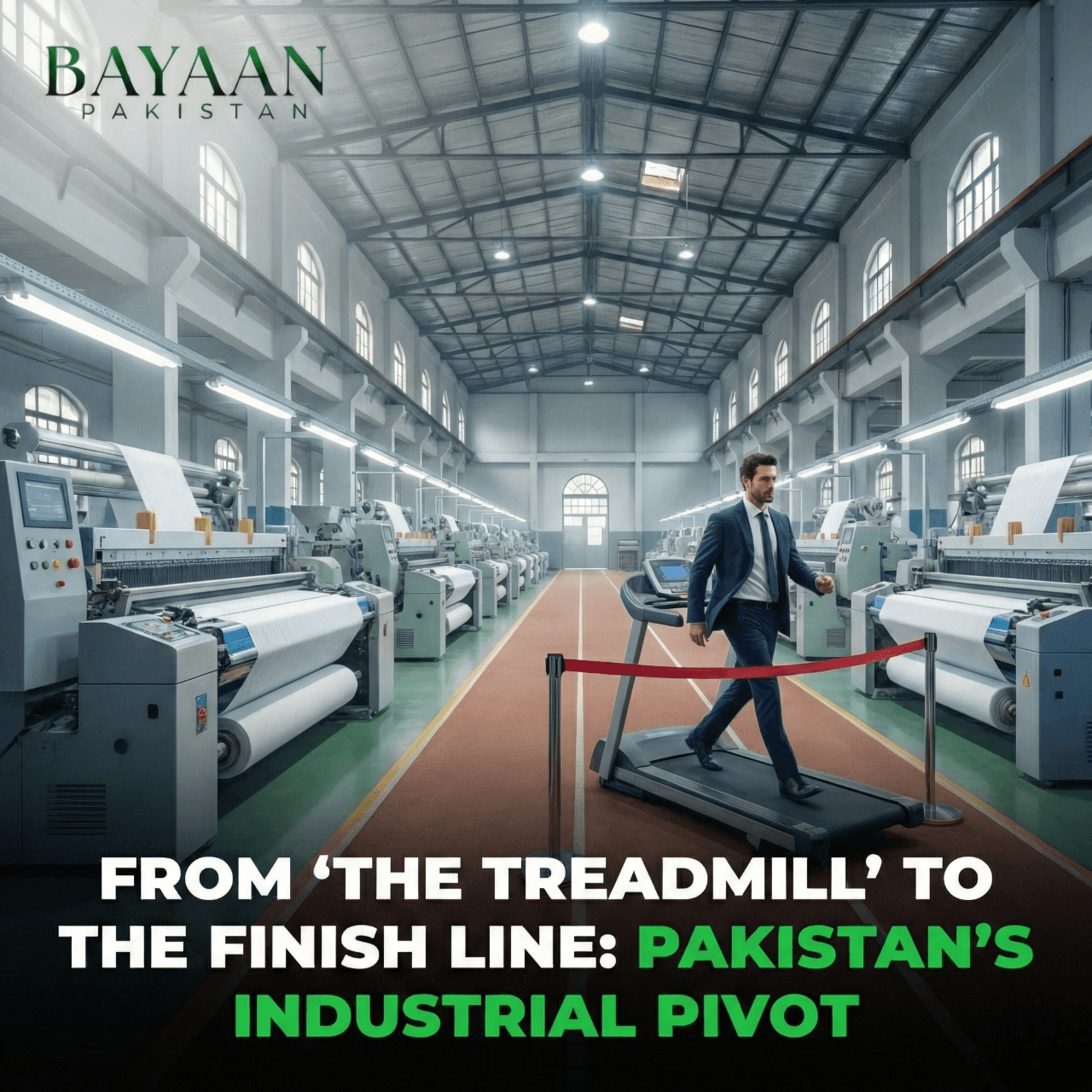
For the last few years, being a manufacturer in Pakistan felt a lot like running on a treadmill set to a 20% incline. You were working twice as hard as your competitors in India or Vietnam just to stay in the same place. But according to Ziad Bashir, Director of Gul Ahmed Textile, the incline just got a whole lot flatter.
In a recent, high-stakes conversation with Shahzeb Khanzada, Bashir broke down the government’s massive new relief package—a move he believes marks the end of "painful stabilization" and the beginning of a real, export-led comeback for 2026.
The "9-Cent" Dream: Leveling the Playing Field
The biggest hurdle for Pakistani textiles has always been the bill. Bashir pointed out a harsh reality: while Indian factories were paying roughly 6 cents for electricity, Pakistani exporters were being crushed by 16 cents.
"You can't compete like that," Bashir explained. "One person is on a flat surface, the other is on a massive incline—eventually, the one on the incline will collapse."
With the Prime Minister’s new announcement, industrial electricity rates are dropping toward 11.5 cents, with the potential to hit 9 cents under new usage schemes. For an industry where margins are razor-thin, this isn't just a "discount"—it’s a lifeline.
Unlocking the "Idle 30%"
There has been a lot of talk about whether Pakistan even has the capacity to grow right now. While some skeptics suggest we are capped out, Bashir is far more optimistic. He estimates that nearly 25% to 30% of our value-added textile capacity is currently sitting idle—silent machines waiting for the power to be affordable enough to turn them back on.
If the industry can flip the switch on that idle capacity, Bashir predicts an additional $3 to $5 billion in exports. In a country desperate for foreign exchange, that’s not just growth; that’s a transformation.
Beyond the Numbers: The "Blue Passport" and Dignity
One of the most unique "human" elements of this new package isn't about kilowatt-hours or interest rates—it’s about the Blue Passport.
The Prime Minister has designated top exporters as "Ambassadors at Large." For years, Pakistani business owners have struggled with visa hurdles and travel restrictions while trying to sell their products in the GCC and Europe. By giving them diplomatic status, the government is essentially saying: "Go out there and sell Pakistan to the world, and we will clear the path for you."
The "Make or Break" Year
Bashir isn't just celebrating; he’s also issuing a challenge. He noted that the Export Refinance Rate has been slashed to 4.5%, making it the most competitive in the region. "No one can complain about that," he said bluntly.
However, he warned that for this to be sustainable, the government must make manufacturing more profitable than the stock market or real estate. To truly absorb the 4 million young people entering the workforce every year, Pakistan needs a steady 6.5% growth rate—and that only happens if the factory floor is the best place to put your money.
The Bottom Line
The message from Ziad Bashir is clear: The "pain" of the IMF years was the price of admission. Now, with lower power costs, record-low refinance rates, and a personal seat at the table with the Prime Minister, the ball is firmly in the court of the private sector.
As Bashir put it, the goal is no longer just "staying afloat." The goal is Export-Led Growth. For the workers in the mills and the entrepreneurs in the offices, 2026 might finally be the year the treadmill stops pulling them backward.
About

Featured Posts
Explore Topics