The Fiscal Guillotine: How the 'Super Tax' is Executing Pakistan's Industrial Future
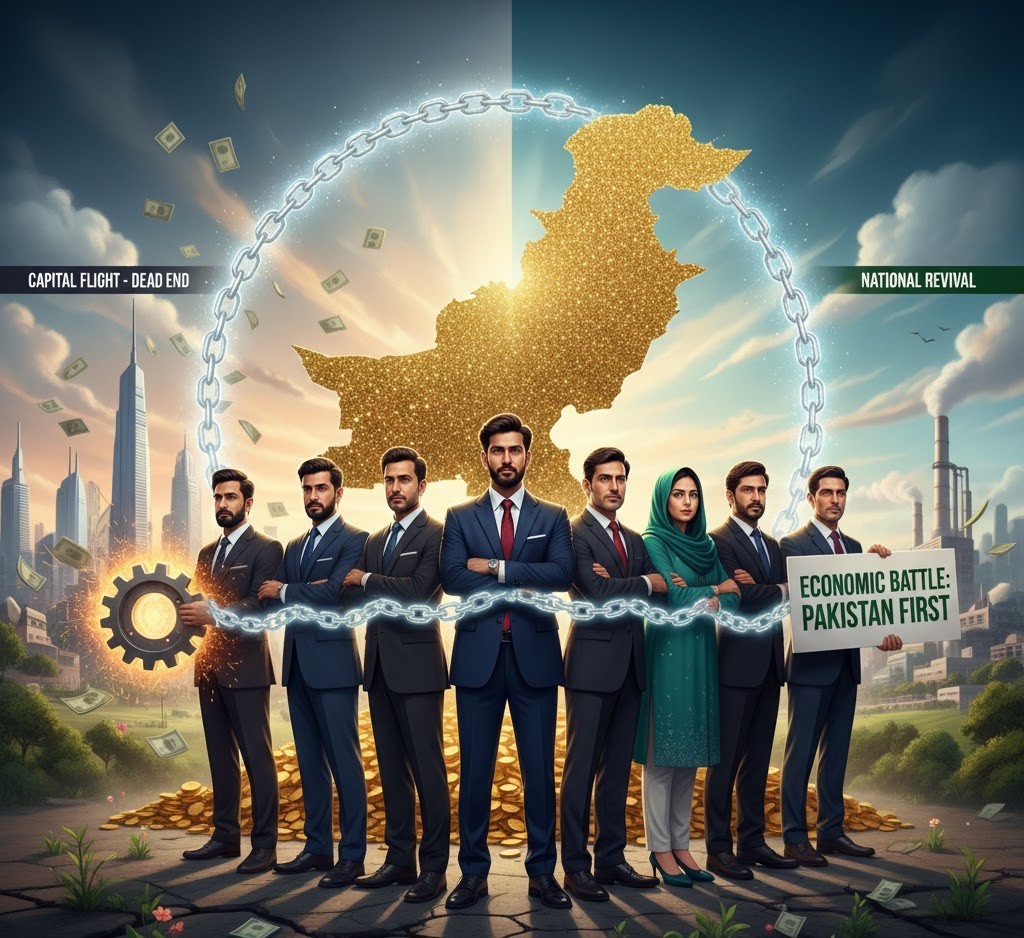
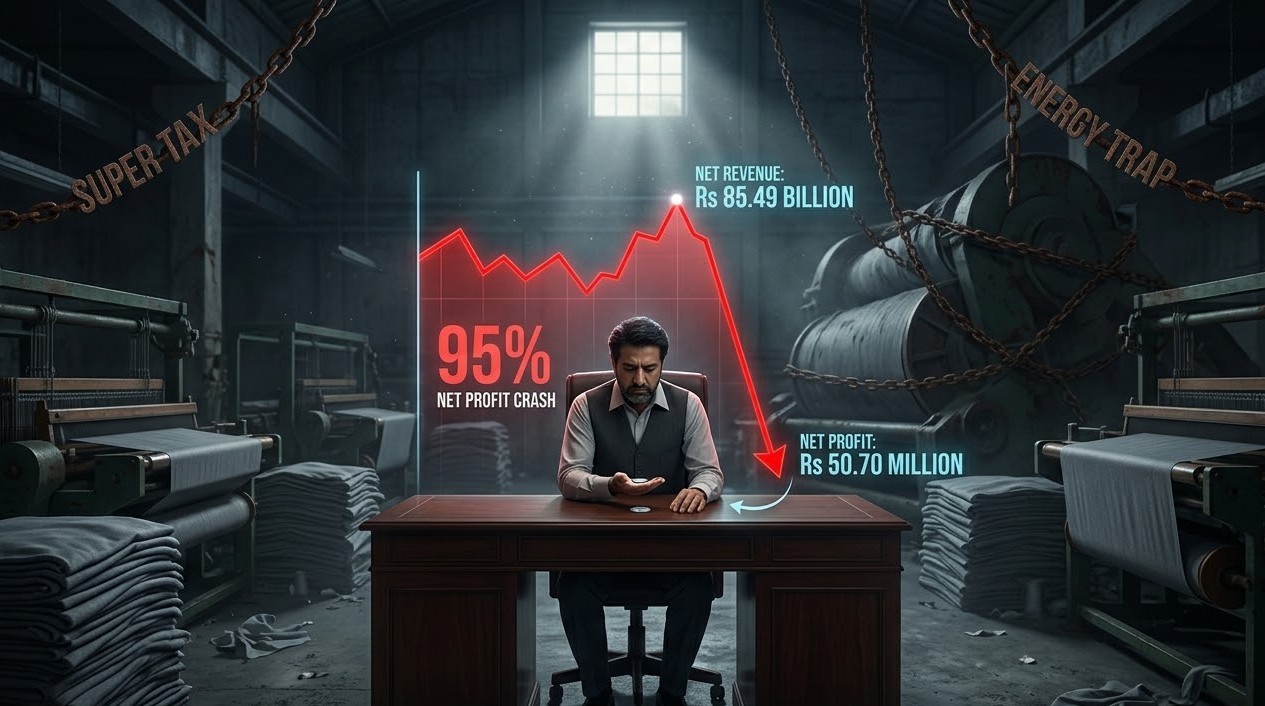
Pakistan’s “Super Tax” has evolved from a temporary fix into a permanent fiscal guillotine, pushing effective corporate rates to a crushing 40%. This predatory extraction is cannibalizing the documented sector, driving away global giants and triggering a massive brain drain of our brightest professionals. Unless the state stops treating its manufacturers as hostages, it will soon find its revenue targets built on the ashes of a hollowed-out economy.

Liam Carter
Introduction: The Penalty for Production
Pakistan's economic planners have perfected a devastating formula: when the state runs out of money, it simply reaches deeper into the pockets of the few who still produce.
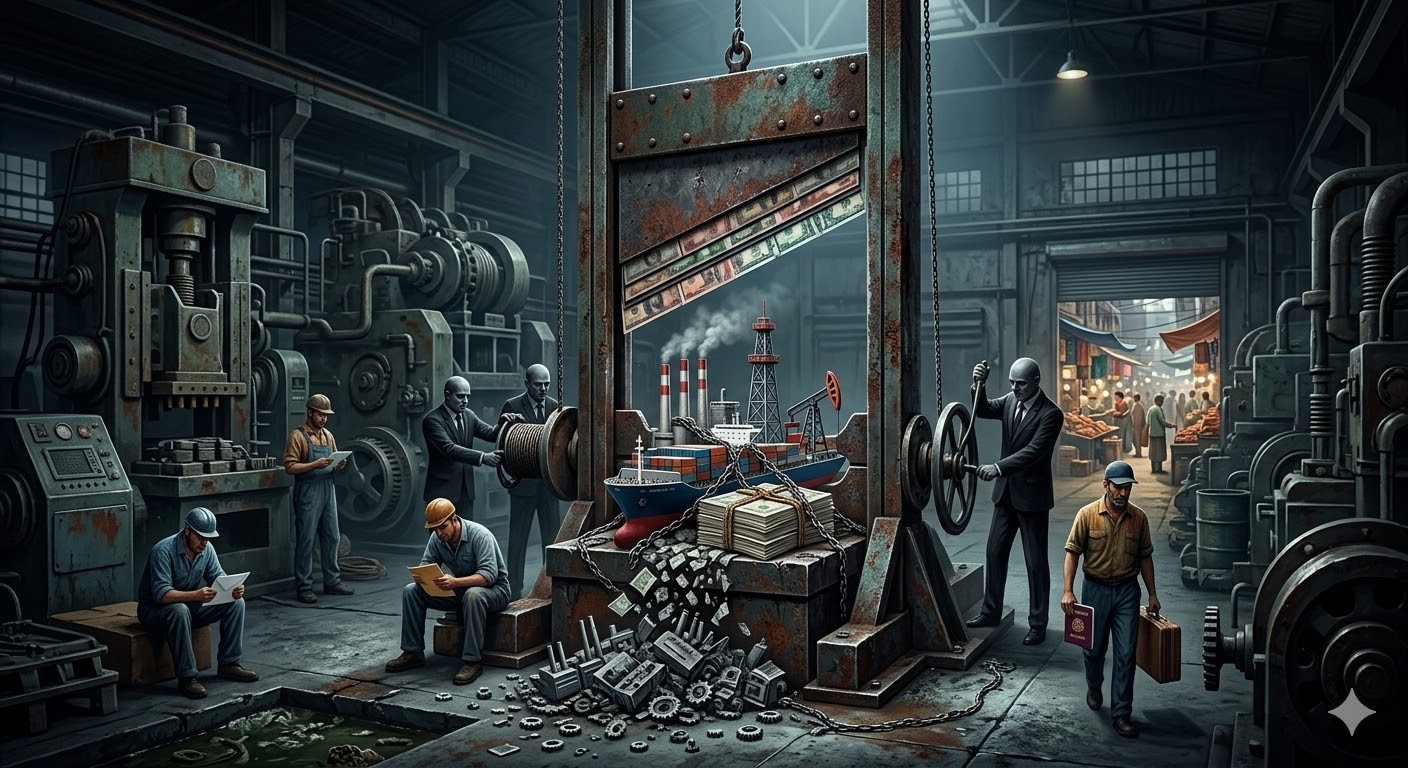
The "Super Tax"—initially sold to the public as a temporary, emergency stabilization measure—has now become a permanent fixture of fiscal extortion. It is no longer just a tax; it is a fiscal guillotine hovering over the documented corporate sector. Introduced in 2015 and dramatically expanded under the Finance Act 2022, the Super Tax was always framed as a one-time solidarity levy on the nation's most profitable companies. That promise has been broken, repeatedly and without apology. Despite desperate warnings from industry leaders, the Federal Board of Revenue (FBR) continues to extract this levy, aggressively punishing profitability and effectively halting national industrial expansion.
The arithmetic of destruction is not complicated. Pakistan's base corporate income tax rate stands at 29%. On top of this, a Super Tax of up to 10% is levied progressively on large-scale industries, in addition to the corporate rate. Waystax Layer in mandatory worker welfare contributions, and the combined burden becomes existential. The state, chronically incapable of reforming itself or broadening its tax base, has instead chosen to cannibalize its most compliant taxpayers. The result is not stabilization. It is slow industrial execution.
The Architecture of Extraction
To understand why the Super Tax is so destructive, one must first understand who actually bears it.
The entities paying the bulk of Super Tax are already Pakistan's highest taxpayers, large corporations, banks, telecom companies, manufacturers, and energy firms that collectively contribute a major portion of total tax revenue. These are also the same entities that employ thousands of workers, invest billions in infrastructure, and drive exports and services. Dawn
The Overseas Investors Chamber of Commerce and Industry (OICCI), which represents over 200 leading multinational companies, offers a staggering illustration of this concentration. OICCI member companies during the 2024 fiscal year contributed Rs2.7 trillion, almost Rs10 billion on a daily basis, in government levies, equivalent to 30% of the FBR's total tax collections. Their aggregate turnover exceeded Rs11 trillion. The Nation This is not a group of tax dodgers. This is the backbone of Pakistan's formal economy, and it is being systematically destroyed.
The FBR's strategy is not merely misguided. It reflects a structural pathology. The FBR, in its current form, is incapable of broadening the tax base Pbc, an admission made not by opposition politicians, but by industry leaders directly engaging with the government. Without the political will to tax agriculture, real estate, and the retail bazaar economy, the path of least resistance is to squeeze those who are already squeezed. The Super Tax is the most visible instrument of that squeeze.
The Chorus of Condemnation
The outrage is no longer confined to private boardrooms; it is now a matter of public record. Prominent organizations and financial leaders are universally condemning the tax regime.
Ehsan Malik and the Pakistan Business Council: A Verdict on Uncompetitiveness
The Pakistan Business Council (PBC) represents Pakistan's 100 largest manufacturers, companies that collectively account for 40% of exports, 20% of GDP, and, critically, approximately 56% of total tax collection. The Nation The PBC's Former CEO, Ehsan Malik, has become the most relentless documented voice against this policy.
In direct testimony before the Senate Standing Committee on Finance and Revenue, Malik delivered a verdict that should have ended the Super Tax debate: "There is a significant default risk, and the government should not expect new investments." Pbc He was explicit about what the Super Tax actually meant for Pakistan's competitive position. Exporters assessed at a 39% combined corporate and Super Tax rate face a tax impact more than three times that of Bangladesh and twice that of Vietnam and Egypt. Dawn This is not a marginal disadvantage. It is a mathematical impossibility for Pakistani exporters competing on global markets.
In a letter to Finance Minister Muhammad Aurangzeb, Malik was equally pointed about the downstream human cost: "A 119 per cent increase in the number of Pakistani emigrants is a cause for concern. Many of these individuals are experienced, highly qualified professionals that the formal sector is losing." Dawn He called for the phasing out of the Super Tax, warning of accelerating capital flight if the government continued its current course. "Without any political will to expand the base and increase the capacity of the FBR, the burden of the additional taxation will again be thrown on the manufacturers," Dawn he lamented.
The PBC's position on the IMF dimension is equally damning. Malik argued that the short-term tariff-led approach has rendered the productive sector uncompetitive in exports, resulting in negative consequences on the external account Dawn, an irony that the very stabilization measures demanded by Pakistan's lenders are undermining the export growth those lenders say they want.
Shabbar Zaidi: The Insider's Indictment
Few voices carry more weight on tax policy than former FBR Chairman Shabbar Zaidi, the man who once sat atop the very institution now wielding the Super Tax as a weapon. His condemnation is unambiguous. In his detailed analysis of the Finance Bill 2024, Zaidi delivered this judgment: "Pakistani businesses are already subject to around 10% higher tax rate on corporations in the region. The essential corrective measure of abolition of super tax has not been done." Economy
He went further, diagnosing the deeper institutional failure: "All the efforts, done in the past, of bringing Pakistan in line with the region in income tax and VAT rates are spoiled by 'Babus' at FBR." Economy The documented sector, Zaidi wrote, cannot afford to have the export sector disturbed, because a country in severe current account crisis must not forget the multiplier effect that would come on employment and industry. Economy
Zaidi's critique is particularly devastating because of his vantage point. As a former FBR Chairman, former Senior Partner at PwC Pakistan, and former President of the Institute of Chartered Accountants of Pakistan, he understands the bureaucratic machine from the inside. When he says the FBR's approach will fail, it is not ideology. It is professional diagnosis.
The OICCI: Foreign Capital Votes With Its Feet
The Overseas Investors Chamber of Commerce and Industry has issued some of the most striking warnings about where the Super Tax leads. OICCI CEO Abdul Aleem has been blunt in multiple public forums. "Many of the companies packed up a few years back," Arab News PK he told journalists, citing the string of multinational exits that have quietly stripped Pakistan of industrial investment. Shell sold a majority stake in its Pakistan business in November 2023. TotalEnergies sold 50% of its shareholding in Total PARCO Pakistan the same year. These are not anomalies. They are signals.
In a Dawn interview, Aleem described the country's tax structure in terms that should alarm any economic policymaker: "Both the salaried individuals and the compliant corporate sector have borne a disproportionate share of tax burden for far too long. It is compelling the talent to leave Pakistan while putting a huge drag on investment, export and economic growth. Enough is enough; this cannot go on any longer. Something's got to give." Dawn
Aleem and the OICCI have been specific about the remedies required. Key OICCI recommendations call for a gradual reduction in the corporate tax rate from 28% to 25% through annual 1% reductions, aligned with other emerging economies, and the abolition of the Super Tax to reduce the financial burden and improve business competitiveness. Dawn The OICCI has taken these demands directly to the IMF itself. In meetings with the IMF mission, the OICCI emphasized that the current tax structure places a disproportionate burden on compliant, documented enterprises Dawn, and formally demanded the Super Tax's abolition.
The scale of what is being lost is quantifiable. For a developing country like Pakistan, FDI is expected to be over 3 percent of GDP, against the current level of less than 0.5 percent. The potential of FDI is around $9 billion. Arab News PK The Super Tax is not just a drag on existing businesses. It is a wall blocking the foreign investment Pakistan desperately needs.
The SIFC Admission: Even the Establishment Knows
Perhaps the most remarkable condemnation comes from within the state's own institutional architecture. Even the military-backed Special Investment Facilitation Council (SIFC), established specifically to attract Gulf and foreign investment, has been forced to acknowledge the obvious. SIFC officials have admitted in front of corporate leaders that the current taxation format is "choking" business and that "business as usual cannot continue," suggesting the Super Tax must be scrapped to attract Gulf investment. The entity created to sell Pakistan as an investment destination is privately telling investors that Pakistan's own fiscal policy is the obstacle. Yet the FBR's extraction machine keeps running.
The Retroactive Guillotine Falls: Rs. 270 Billion and the Court's Verdict
The Super Tax's damage has been compounded by a dimension even more economically violent than its rate: its retroactive application.
After over a decade of litigation, Pakistan's Federal Constitutional Court validated the Super Tax on entities earning over Rs500 million per year. Companies that had obtained stay orders against this levy must now pay the accumulated tax, an amount estimated at Rs250–270 billion. The News Pakistan
This ruling is being misread by those who celebrate it as fiscal justice. The legal question and the economic question are entirely separate. The court may have affirmed the government's authority to legislate this tax. It cannot affirm the economic wisdom of doing so. Forcing companies to provision Rs270 billion in retroactive payments, simultaneously, across an entire sector, is a working capital shock of industrial-scale proportions. Companies that had been provisioning for this eventuality, or fighting it in court, must now divert funds that would otherwise have gone toward wages, expansion, or supply chain investment.
As one Islamabad-based lawyer writing in Dawn observed: businesses can plan around high taxes, but not around constantly shifting fiscal goalposts. When profitable enterprises are repeatedly subjected to new and retrospective tax burdens, the signal sent to both local and foreign investors is one of unpredictability. Dawn The retroactive enforcement of the Super Tax does not merely impose a financial burden. It retroactively re-prices every investment decision Pakistani corporations made over the past decade.
The Industrial Bloodbath
The impact of this policy is fast-tracked deindustrialization, and it is visible across every sector of Pakistan's formal economy.
Capital Paralysis
You cannot expand a factory or upgrade technology when the state retroactively seizes 10% of your earnings to plug its own fiscal deficit. Companies are hoarding cash simply to provision for sudden tax demands, freezing all domestic reinvestment. The PBC has documented this explicitly: fiscal policies are already skewed against manufacturers, and the sector cannot bear the additional tax burden. Pbc The OICCI has confirmed a further dimension: OICCI members emphasized that businesses plan over long horizons, and frequent changes, unclear interpretations, and retrospective measures raise the cost of capital and erode investor confidence. ProPakistani
The combination of the Super Tax and retroactive enforcement has created what amounts to a sovereign expropriation risk. Rational foreign investors now model Pakistani tax policy as unpredictable by definition, demanding higher risk premiums on capital deployed here, or simply deploying it elsewhere.
The MNC Exodus
The departure of multinational corporations from Pakistan is not abstract. Many multinational corporations have "packed up" and left Pakistan in recent years because of the country's inconsistent policies and a complicated tax regime, according to OICCI. Arab News PK The Overseas Investors Chamber has warned of further exits. Many members had decided to partially or completely shut down their operations. "We may see a serious downfall in revenue collection from organized businesses," OICCI officials warned, "therefore we have recommended that the government simplify the tax regime, broaden the tax base, remove the one-time burden of Super Tax from the organized sector." Arab News PK
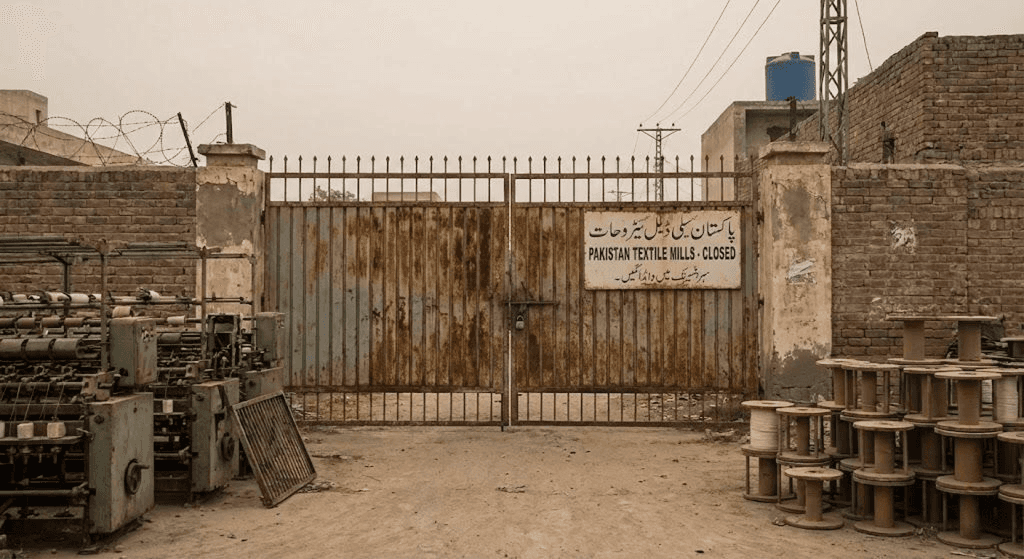
The irony is exquisite and devastating: by squeezing the companies that pay the most in taxes, the government is accelerating their departure and thereby destroying the very tax base it relies upon. When profitability is penalised year after year, businesses do not simply absorb the cost indefinitely. They react. Some scale down operations. Some delay expansion. Some shift investments abroad. Others restructure in ways that reduce taxable income. In the worst cases, they exit altogether. The result? A shrinking tax base. Dawn
The Trickle-Down Tragedy
When margins are destroyed by the Super Tax, the first casualty is the Pakistani worker. Hiring freezes are followed by mass layoffs, and the damage does not stop at the factory gate. The PBC has placed the brain drain squarely within this context: the disproportionate burden of taxes on the formal sector is among the foremost reasons manufacturing remains uncompetitive, keeping the job market depressed. Dawn The OICCI's Abdul Aleem has framed it in even starker terms: the tax burden is not just reducing returns, it is compelling talent to leave Pakistan Dawn at a moment when Pakistan can least afford to lose it.
We are not merely taxing corporations. We are taxing the working class into unemployment, and the professional class into emigration.
The Informal Sector Paradox
The Super Tax's most insidious consequence is the competitive advantage it hands to the undocumented economy. Every rupee extracted from a compliant, formal manufacturer is a subsidy to their informal, untaxed competitor. The PBC has pointed out that the super tax ranging from 1% to 10% on different affluent individuals and companies should be withdrawn The Nation, and that Pakistan's real revenue opportunity lies in bringing real estate and retail into the tax net, a move that could generate Rs747 billion annually. The government's refusal to pursue this path while intensifying pressure on the formal sector is not merely economically illiterate. It is structurally self-defeating.
As former FBR Chairman Zaidi noted, the documented sector of professionals, chartered accountants, formal manufacturers, compliant exporters, have been badly damaged Economy by an approach that is in direct contradiction to the stated goal of broadening the tax base.
The IMF Dimension: Who Is Really Setting Pakistan's Tax Policy?
One dimension that is rarely discussed with sufficient candor is the role of the IMF in perpetuating the Super Tax. Former FBR Chairman Zaidi was direct on this: the IMF defines tax measures, not the government. Aaj English TV The Pakistan Business Council made the same observation, noting that the IMF, recognizing the FBR's inability to broaden the tax base, has simply accepted the path of least resistance, the only way to help balance the fiscal account is to put further burden on the already-taxed sectors. Pbc
This creates a tragic loop. Pakistan's lenders demand fiscal consolidation. Pakistan's government, incapable of structural reform, achieves it by extracting more from the formal sector. The formal sector contracts, reducing the tax base further. The next program demands more from a smaller base. The loop tightens. The Super Tax is not just an FBR policy. It is the visible symptom of an IMF-enforced fiscal trap that Pakistan's government lacks either the will or the capability to escape.
Conclusion: The Point of No Return
The FBR celebrates its collection targets, but these numbers are built on the ashes of our industrial base. The Dawn editorial board captured the essential paradox precisely: Super Tax, particularly with its repeated extensions, expansions and retrospective application, risks reinforcing the perception that success in Pakistan is something to be taxed punitively rather than encouraged. Dawn
Pakistan's real challenge is not squeezing more out of the same limited group of taxpayers. It is broadening the tax base, documenting the economy and ensuring that those who currently pay little or nothing are brought into the system. Dawn The state's approximately 8 million registered taxpayers constitute barely 5% of adults, a damning indictment of a tax administration that has chosen the easy target over the right one.
The Super Tax has proven that the state views its manufacturers not as partners in growth but as hostages. The PBC has warned there will be no new investment. The OICCI has documented the multinational exodus. Former FBR Chairman Zaidi has called for abolition. Even the SIFC has privately conceded the policy is choking the economy it was built to develop.
The fiscal guillotine is not metaphorical. It is operational. If it is not dismantled, if the Super Tax is not phased out, if retroactive enforcement is not arrested, if the documented sector is not given the relief and predictability it needs to invest and hire, there will soon be nothing left to tax. The collection targets will be met, right up until the moment they cannot be. And at that point, unlike a factory that can be rebuilt, the trust of investors, domestic and foreign, will be the one resource that cannot be recovered at any price.
About
Featured Posts
Explore Topics